Posts

Showing posts with the label museums

Report on the contribution of the culture industry to the economy.

The arts and culture industry has grown £390million in a year and now contributes £10.8billion a year to the UK economy. https://www.artscouncil.org.uk/publication/contribution-arts-and-culture-industry-uk-economy-0

Restitution of objects

The government has turned its back on restitution.  What it should have done was promoted dialogue, not shut the door. https://www.museumsassociation.org/museums-journal/news/25042019-culture-secretary-rules-out-restitution?utm_campaign=1468264_25042019&utm_medium=email&utm_source=Museums%20Association&dm_i=2VBX,VGX4,27LVJK,39QTE,1

Waterloo to be re-fought at the Kelvin Gallery Glasgow.

This looks like being an amazing event! I think you need to be a war gamer top attend sadly. Taking place in Glasgow June 2019 http://www.waterlooreplayed.com/about.html

Need Money? Remortgage your museum?

It has just been announced that Glasgow is to remortgage museums to pay for equal pay settlements. This is a big surprise and I am surprised that not much seems to be made of it. It can't be a good idea can it? https://www.museumsassociation.org/museums-journal/news/12022019-riverside-museum-glasgow-remortgaged?utm_campaign=1413726_14022019&utm_medium=email&utm_source=Museums%20Association&dm_i=2VBX,UAU6,27LVJK,34UZU,1

Have you a definition of the modern Museum? ICOM wants one.

New definition of the Museum called for by ICOM. https://www.museumsassociation.org/museums-journal/news/11022019-icom-seeks-proposals-new-museum-definition?utm_campaign=1413726_14022019&utm_medium=email&utm_source=Museums%20Association&dm_i=2VBX,UAU6,27LVJK,34UZU,1 The current definition is: “A museum is a non-profit, permanent institution in the service of society and its development, open to the public, which acquires, conserves, researches, communicates and exhibits the tangible and intangible heritage of humanity and its environment for the purposes of education, study and enjoyment.” The MA definition is ( 1998)  ' Museums enable people to explore collections for inspiration, learning and enjoyment. They are institutions that collect, safeguard and make accessible artefacts and specimens, which they hold in trust for society .'

I am Ashurbanipil Exhibition at the BM

Image
The British Museum has a host of wonderful relief carvings collected from Assyria in the 19th and 20th Century.  They are free to see, easy to get to on the ground floor, can be enjoyed without much insider knowledge, and nor is it necessary to spend long reading labels. Now the Museum has put some of them together with a whole load of objects from the store. The net result is a very satisfying exhibition which gives a pretty good background to the enjoyment of the reliefs. The carvings are amazing, and look very good with the black backgrounds and relief lighting.   These two, are larg scale sphinx to the left and to the right the head of a diety half animal half human. Ashurbanipil was also something of a star student, and is, in one notable relief, depicted with a pen in his waistband.  (picture to the right).  Archaeologists have found shelves and hundreds of clay tablets showing that the King had a large library.    The displays...

Daily Mash woman-in-art-gallery-just-guessing-how-long-to-stand-in-front-of-each-painting-

Satire on difficult issues for Museum visitors. http://www.thedailymash.co.uk/news/arts-entertainment/woman-in-art-gallery-just-guessing-how-long-to-stand-in-front-of-each-painting-20170311123869

Story Shapes in Museum displays

This is a short video by Tim Gardom of an idea I first came across in Saying it Differently A handbook for museums refreshing their display Alison Grey, Tim Gardom and Catherine Booth The video is here:  https://vimeo.com/243303263 The handbook is here https://www.swfed.org.uk/wp-content/uploads/2012/05/Saying-It-Differently.pdf

National Army Museum Transformation

Image
 I went to see the National Army Museum for the first time since its HLF scheme opened.  I always remember the  building as being in a cramped little space with no sense of place.  The architectural transformation by BDP is a resounding success. It now has a decent frontage on Royal Hospital Street and inside has a rational and open countenance that is a pleasure to inhabit.. The displays are less of a success.  The only section that really works is the 'Soldier' exhibition. It works very well to introduce the experience of being a soldier with a nice mix of object, interactive, quotation and image.  However the Battle section is very disappointing. It really gives neither an interesting insight into the wars Britain has fought, not does it give a view of experience of war in the various periods or the hardware of war. I left this section feeling I had learnt nothing.  I had similar experiences in the Army and Society sections. I think the proble...

Cuseum — Life & Death of QR Codes in Museums

This is a very useful and short summary of the life and death of the QR Code - a method of directing people to extra online content that sounded great but which was never taken up in any significant number. Also has useful links to other material re digital engagement. Cuseum — Life & Death of QR Codes in Museums

Britain's First Museum Catalogue - Musaeum Tradescantianum, or, A collection of ra...

For some reason this is not on display at the new Ashmolean museum Founders Room Musaeum Tradescantianum, or, A collection of ra...

Izi.Travel Museum guided tour

I tested a museum's izi.travel guided tour. These were my conclusions. The app worked very well as far as navigation was concerned. It provides a GPS based mapped route around the system.  There was a slight uncertainty as to how to start the tour but otherwise, mechanically, it looked professional and worked well. The scripting was very professionally read by actors.  I think the main problem was that each stop was too long.  Some of them were 10 minutes long and this seemed like a bit of a slog to get through. I think it should be split up into 2 - 3 sections with optional extras if any one wants to explore.  I don't know if this is possible with the app. I would have liked to have seen more images and less audio. The script did not make it clear whether the spoken material by the characters was made up by the script- writer or quotes from a contemporary source.  I guess a mixture of both but the uncertainty devalued the quotations. Another problem ...

Going underground: London’s new Postal Museum and subterranean mail train | Travel | The Guardian

Reopened museum in Clerkenwell. Going underground: London’s new Postal Museum and subterranean mail train | Travel | The Guardian

Story boards and the past

Image
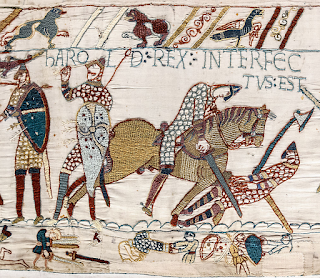
Story Boards examples from the Past Story boards began as a tool for film makers but are now being used by a range of design disciplines. At CSM we use them extensively for the MA for Narrative Environments.  My question was are there any example from the past which might be useful for my students to consider.  These are my examples: Bayeaux tapestry The tapestry moves through time and space with a clear narrative. Different narrative layers are used. Simple conventions make it easier to read – the English for example have moustaches while the Normans have pudding basin hairstyles. Text is limited to crucial identification of leading characters. Places are not spelt out though can be identified by those who know by context and form.It is linear and has beautiful clarity. The top and bottom strips allow additional information often decorative but often individual stories or symbols. The following shows a scrolling video of the Tapestry:   https://www...

The V& A new entrance

Image
The V & A has revealed its new entrance.    The architect is the Amanda Levete Architect. It provides a new entrance from Exhibition road, and a lovely white open space courtyard with good views of the Henry Cole Wing.  Below is a new temporary exhibition Gallery, and it integrates various routes through the Museum. On a personal level it is great to see the blight caused by the work coming to an end and allows my V&A guided walk to be restored.  I'm particularly pleased to see the Ceramic Staircase restored. I hope it isn't long before the Cast Court is reopened. This is what the V&a says about the project:  https://www.vam.ac.uk/info/exhibition-road-building-project. And here the Guardian.  The V&A

Introducing the Freud Museum - YouTube

New introductory film on the Freud Museum Introducing the Freud Museum - YouTube

Eric Gill exhibition to confront child sex abuse | Museums Association

This is an important issue - can you show work by artists who did despicable acts?  Can we dance to Gary Glitter?  or go to an Eric Gill exhibition?  The last question will be answered if you go to this exhibition. Eric Gill exhibition to confront child sex abuse | Museums Association

The Destruction of the Country House

Salon IFA had an interesting report on the export of British Heritage. 'In 1974 Harris, Roy Strong FSA and Marcus Binney FSA co-curated the Destruction of the Country House exhibition at the V&A, which encouraged the founding of SAVE Britain's Heritage, of which Binney is currently Executive President and Harris a Trustee. Now, according to the Observer , Strong and Harris are hoping Britain’s ‘lost heritage’ can be tracked down. From the 1880s to the 1940s entire historic interiors were shipped across the Atlantic, to be bought by the likes of William Randolph Hearst, John D Rockefeller, JP Morgan and Henry Frick. The owners of Gwydir Castle, Conwy, have been searching for 16th-century decorative carved oak panelling, stripped from the castle and sold to Hearst in 1921, without success. Strong told the Observer : ‘There were ship-loads of early English portraits exported, not just grand things. There’s English sculpture – how much of that went to America? We don’t...

Roadkill and lawnmower exhibitions: The weird ways museums are finding funding - BBC News

Interesting ideas. Roadkill and lawnmower exhibitions: The weird ways museums are finding funding - BBC News : London's Museum of Curiosities.

What to do with your slides

Paul Stamper FSA has a useful proposal: (.Salon380 The Society of Antiquaries of London Online Newsletter (Salon) ‘In part’, he writes, ‘it’s the sheer number of slides which can be so daunting. I’d suggest the only way forward is to be ruthless, and to do a rapid triage. First, family slides, including ones where offspring are providing scale against ruins, should be passed to relatives. The great mass which might be termed “Where I went on my holidays” – views of Exeter cathedral or the Leaning Tower of Pisa – plus slides copied from books for lecture purposes, could (and should) be binned with the clearest of consciences. This would then leave the third category, which is material potentially of interest to posterity such as pictures of excavations, or of lost or changed vernacular buildings, townscapes and industrial landscapes.